

One-time speed test
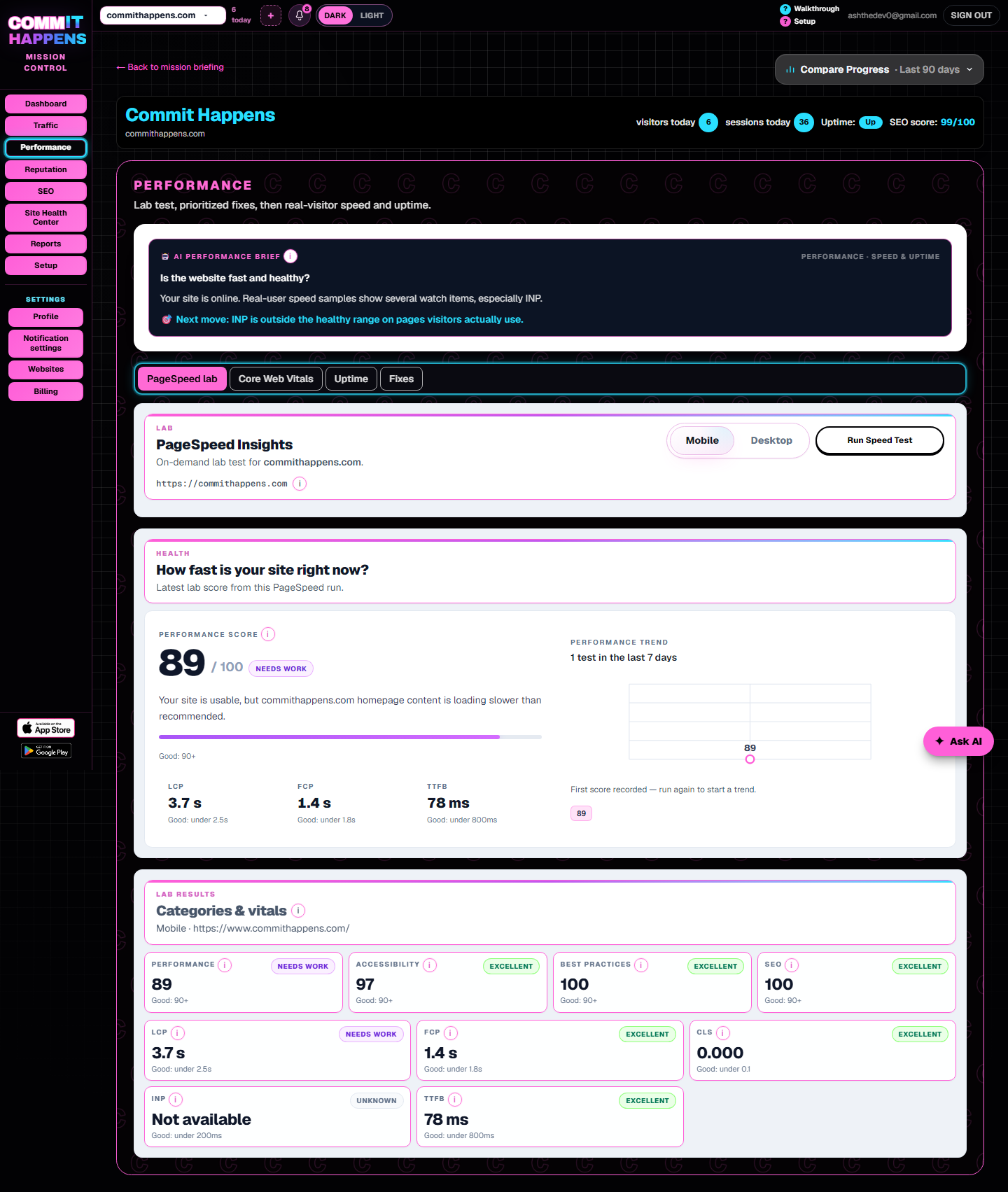
- Answers how fast your pages feel right now — LCP, INP, TTFB, and heavy assets on money URLs.
Website performance monitoring
Paste your URL for a free speed baseline on the pages that convert — then keep watching for regressions after plugins, heroes, and scripts pile on.
Not just a lab score.
Speed tied to real money pages.
Works with WordPress, Wix, Shopify, Squarespace, Webflow, Next.js, React, and more.
Curious what you'll get? View a Dashboard Walkthrough →
What speed monitoring watches
Visitors don’t file tickets when a page feels sluggish — they leave. Performance monitoring watches lab vitals and speed signals over time so a new hero image or plugin does not quietly undo last month’s fix.
How it works
Homepage, pricing, contact — not abstract benchmarks.
Fix the URLs that lose leads first.
Catch slowdowns after the next plugin or hero video.
Real moments
Those moments usually trace back to a heavy asset or a sluggish money page — if you’re measuring the right URLs.
Why continuous speed watching matters
A one-time site speed test baselines how fast pages feel right now — often using lab measurements on money URLs. Performance monitoring watches those signals over time in your dashboard, including PageSpeed lab runs and Core Web Vitals context where available. Uptime monitoring asks whether the site responds. Performance monitoring asks whether it responds fast enough for humans to stay and convert.
A check of how quickly visitors can see and use your page — especially LCP, FCP, INP, and TTFB on mobile.
Commit Happens ties results to real business URLs, not abstract lab scores alone.
Google’s real-user speed signals — especially how fast main content loads (LCP) and how responsive pages feel (INP).
Commit Happens highlights watch-range pages on URLs that matter for conversions.
Visitors leave before they read your offer when pages feel sluggish. Slow money pages leak leads even when the server is technically up.
Uptime asks whether the site responds. Performance monitoring asks whether it responds fast enough for humans to stay and convert.
Performance monitoring tracks speed-related signals on your key URLs over time — not just a single lab score from one visit. It helps you catch regressions after content, plugin, or template changes.
Speed changes after deploys, new images, analytics scripts, and CMS updates. A snapshot tells you today’s score; monitoring tells you when a page started getting worse.
Common causes include oversized images, render-blocking scripts, new plugins, hero videos, third-party widgets, and server response slowdowns on converting pages.
Paste your URL below — free speed snapshot.
After your free scan
Catch regressions when someone adds a heavy image or plugin.
No credit card required · Cancel anytime · 7-day full access